
Regional workshops in Bălți and Cahul to protect freedom of expression
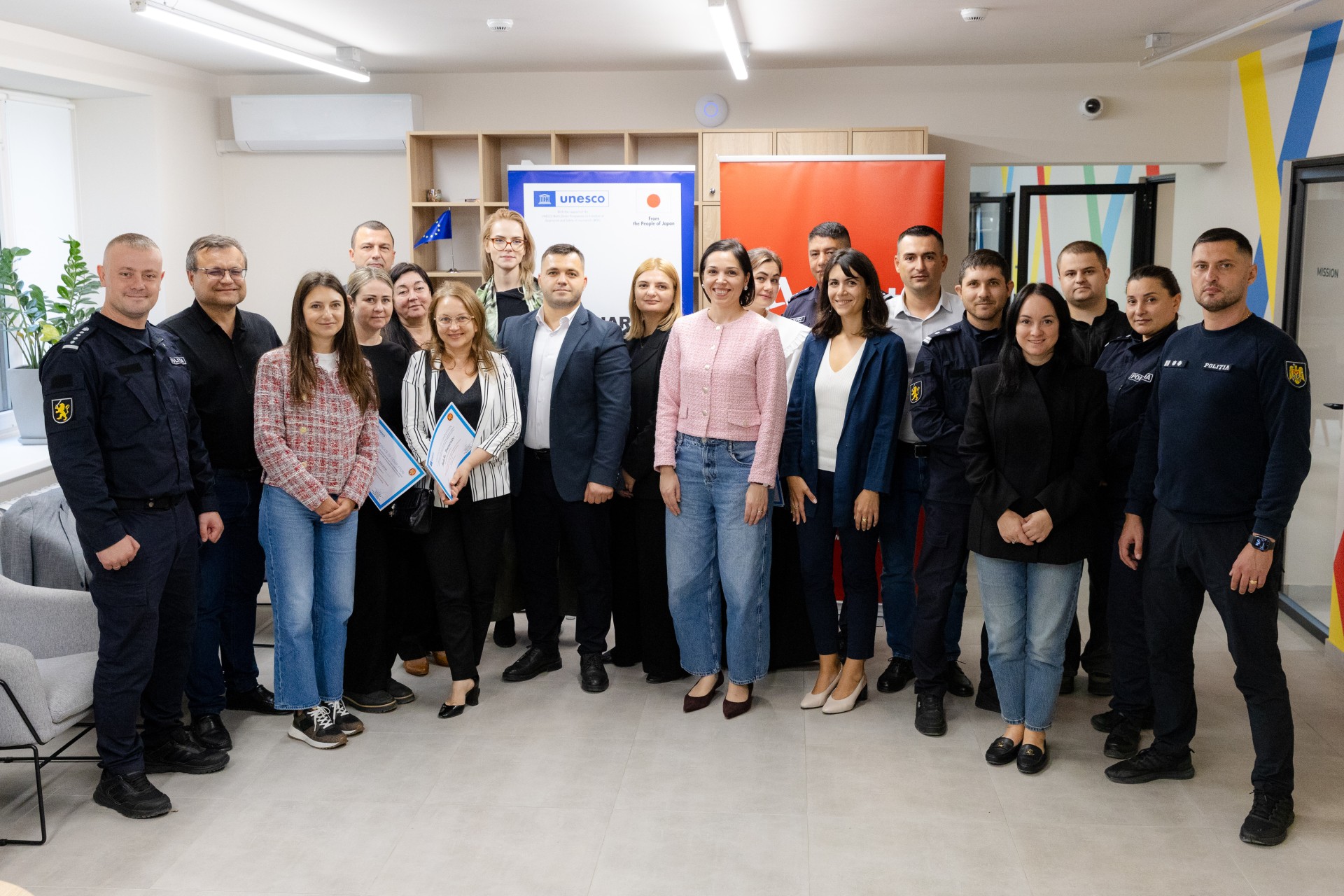
Over 50 representatives from law enforcement agencies, the media and civil society took part, on 7 and 9 October 2026, in two regional workshops held in Bălți and Cahul, focusing on freedom of expression, the safety of journalists and strengthening cooperation between the police and the media.
Over 50 representatives from law enforcement agencies, the media and civil society took part, on 7 and 9 October 2026, in two regional workshops held in Bălți and Cahul, focusing on freedom of expression, the safety of journalists and strengthening cooperation between the police and the media.
The events were organised by the Association for Participatory Democracy (ADEPT), in partnership with UNESCO and the General Police Inspectorate, as a follow-up to the national train-the-trainer programme and the dialogue between the police and the media, which had previously been launched as part of the project.
The workshops aimed to incorporate international standards and best practices into the work of law enforcement agencies at regional level, as well as to develop mechanisms for communication and cooperation with journalists and representatives of civil society.
During the sessions, participants analysed international and European standards on freedom of expression and the safety of journalists and civic activists, the national legal framework, and the responsibilities of law enforcement authorities. The discussions covered access to information of public interest, the protection of journalistic sources, the interaction between the police and journalists in the course of their professional duties, as well as the measures set out in the National Action Plan on the Safety of Journalists.
Particular emphasis was placed on the practical application of these principles. Through case studies, exercises and facilitated discussions, participants identified the challenges they face in their day-to-day work and solutions for improving communication, preventing incidents and managing sensitive or crisis situations.
An important component of the workshops focused on strengthening the authorities’ capacity to prevent and investigate incidents targeting journalists. The activities provided an opportunity to discuss and test in practice the procedures proposed in the inter-institutional guidelines on investigating such incidents, which are currently being developed with UNESCO’s support. In this way, practical training also contributes to the development of institutional tools tailored to the realities on the ground.
A distinctive feature of the workshops was the involvement, as trainers, of police representatives who had previously taken part in the national training programme, alongside national and international experts. This approach helps to develop expertise within the institutions and ensure the continuity of the training process at local level.
By organising these workshops, ADEPT, UNESCO and the General Police Inspectorate aim to strengthen an ongoing dialogue between law enforcement authorities, journalists and civil society, based on a mutual understanding of roles and responsibilities, respect for fundamental rights and transparent communication with the public.
The activities were carried out as part of the UNESCO project Protecting Information Integrity and Freedom of Expression in the Republic of Moldova, implemented with the support of the Government of Japan and the UNESCO Multi-Donor Programme for Freedom of Expression and the Safety of Journalists (MDP).